Sunday, 2 January 2011

Regis Road Recycling and Re-use Centre - Camden Council

During this focus week I went to re-designed recycling centre in Kentish Town, North London. The new design is very simple and convenient for all household waste and commercial green waste. It is very convenient place close to Camden and Central London. 95% of waste collected on site is recycled and reused. All green waste collected from horticultural businesses is used to make compost and is sold again. Also the site offers access to schools and other learning institutions. It is important for us as landscape architects to know more about recycling and environment, because those are very crucial factors in design.
The following are some photos of the site...


Saturday, 6 November 2010

Gardening in Edgware, North London


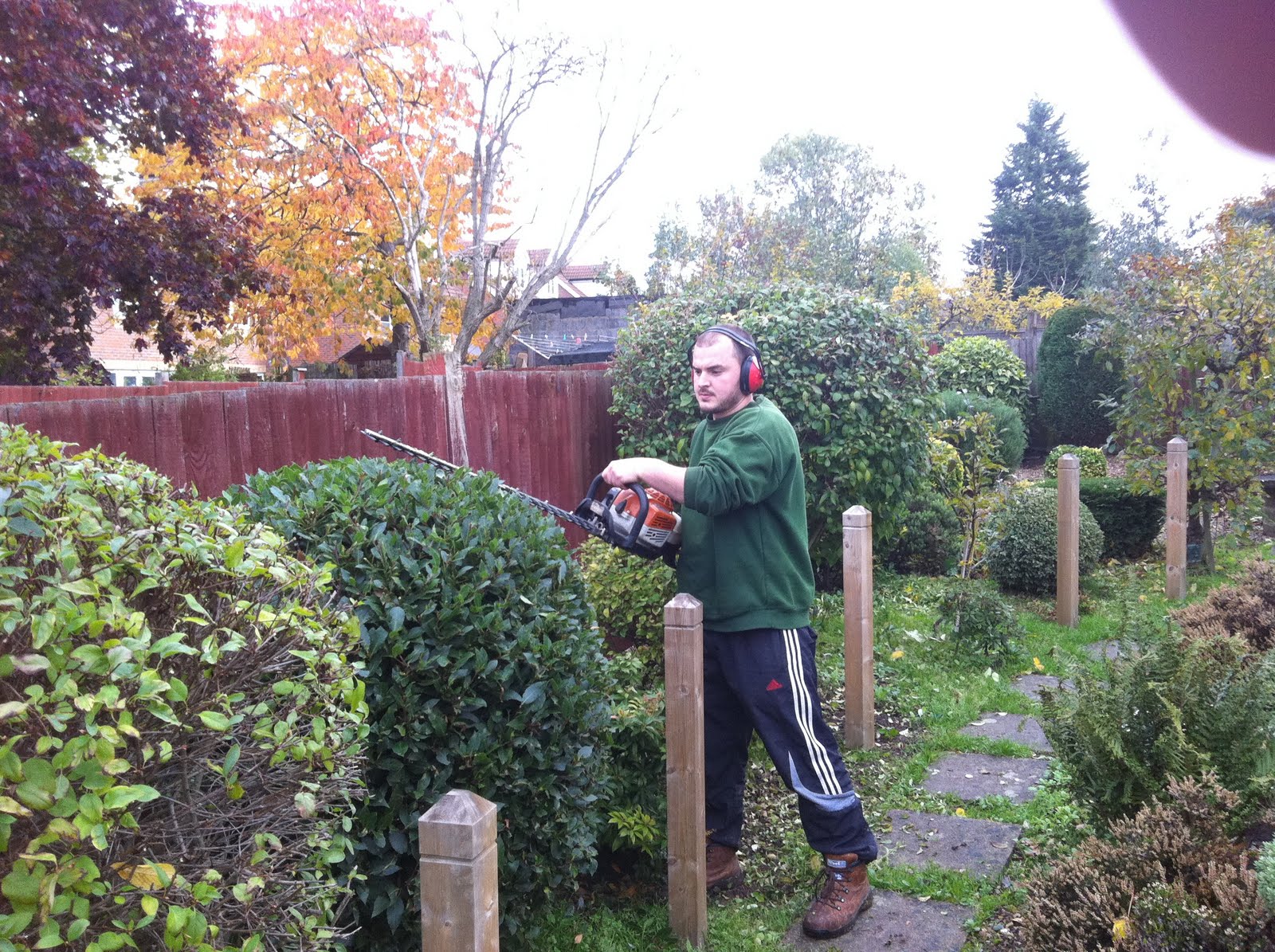
The garden tidy up included: weeding, clearing leaves and other debris, shaping of shrubs, cutting down and dividing herbaceous plants, shaping evergreen plants, pruning fruit trees, planting winter bedding and bulbs, turning over the soil.


A glue plastic is tied to the bottom of the tree will stop 90% of pest trying to climb the tree. This is a good practice and is usually used to fruit trees and helps them to produce better fruits without using any pesticide chemicals.


Pruning of fruit trees such as apples and pears is done in November, it is important that this is done correctly so the plants grow health and produce better fruits. There is some fruit trees such as cherries and plums (prunus spp) that usually are pruned after flowering to prevent silver leaf disease.


There are some perennial plants that like a really gently pruning, this group includes most of acid loving plants such as pieris, rhododendron and magnolias.


Two eunoumus spp planted together and shaped as a single one, looks nice doesn't it?


Me shaping plants such as sweet bay, forsythia, abelia etc. all timber posts in this garden are used to help the owner (disabled lady) move around and enjoy her garden.
Gardener or Landscape Architect?
When people ask us about our profession, we tell them that we are Landscape architects. Sometimes they think that this is type of gardening design and landscape. Well, we don't get impresed when we are called 'gardener'. We know that a Landscape Architect is more than a gardener or garden designer/landscaper, however we know that we have to collaborate with this category of people when designing.
It is important for us to know about plants, landscape materials and maintenance. I believe that when designing we should include a maintenance programme for our design. The maintenance programme and average yearly maintenance cost. This can make the design look good at all time and keep its values for long.
I hope all this will encourage Landscape Architects to learn more about plants, role in design and maintenace.


Friday, 5 November 2010

O2 Centre

O2 centre in Greenwich is a new contemporary design in East London. Landscape materials and plants used in design are unique and great to get ideas and inspiration in our designs. Focus week helped us to travel and see new built designs, learn new things, visit exhibitions. That makes this module very different from others and allows us to explore landscape and have fun.


Ghost Forest

Ghost Forest Exhibition, University museum, Oxford, July 2010 - July 2011


All those tree roots from the worlds vanishing forest have been
transported from West Africa and Brazil. They are displayed in
the front of Oxford's University Museum of Natural History. It was a

good experience looking at all those giant tree roots in the front of you. as we know trees have a great value for people and landscape. It is shame to hear and see TV programmes how people in third world countries cut down so many trees and destroy so many forests (the size of a football pitch is destroyed every 4 seconds).


Alive this trees stand 61 meters high (taller than Nelson's column).
These trees were supplied from a sustainable tree industry and only three trees of Ghost Forest were logged, the rest falling in adverse weather.

I spent the rest of the day walking around Oxford city, finishin my jurney at Oxfords Castle and having a coffeee in a roof garden.


Thursday, 20 May 2010

Presentation from different practices

Arups
Arups is a multidisciplinary international Landscape Architecture practice. We had a presentation from two Landscape Architects talking about detail and design in large scale. It was nice to see how they worked, with a lot of staff specialised in different things. I enjoyed their presentation and the projects that this two Landscape Architects were involved. One of the was specialised in engineering and construction and the other one more in designing and planting.

Capita Lovejoy -Martin Kelly
Trees lecture

Martin Kelly is the director of Capita Lovejoy. He had a long term experience with land and trees. In his presentation we saw some images comparing the existing Thames water front with Plane trees and how the are could have been without trees. That was the time that i really anderstood the importance of trees. Also he showed some other projects by Capita lovejoy. I really enjoyed his presentation.


Gustafson Porter
Sam, detail lecture - Old Market Square, Nottingham

Gustafson Porter it is a practice based in Kentish Town, North London, Sam was working for the practice for the last 6 years. He discussed the landscape detail in old market square, Nottingham. He explained how the designed the square and the process of creating a detailed plan of granite paving and water feature and a model to understand the way in which the water would flow. Also Harry from level 6 is working part time for the practice. He had his say about the experience of him involved in different projects and his main tasks. was nice to hear from a student and his experience working in a practice.

King's Cross Development

During my focus week i have been to King's Cross area which is in ongoing refurbishement. The development includes up to 25 large office buildings, 20 new streets, 10 major public spaces, the restoration and refurbishment of 20 historic buildings and structures, and some 2000 homes
and serviced apartments.
1. Site panorama showing the construction area
2. Model of the site
3. Visalisation of
Regents Canal by me

Wednesday, 19 May 2010

London Olympics 2012

The London 2012 Games are the catalyst for transforming 2.5sq km of land in east London. What was industrial contaminated land has been rapidly transformed over the past three years.

The Olympic Park will create a green backdrop for the Games and a new green space after 2012 for people and wildlife living in and around the area to enjoy.
The southern part of the Park will focus on retaining the festival atmosphere from the Games, with riverside gardens, markets, events, cafes and bars. The northern area will use the latest green techniques to manage flood and rain water while providing quieter public space and habitats for hundreds of existing and rare species from kingfishers to otters.

Around 2,000 semi-mature British-grown trees have been hand-picked to form the roots of the Park’s green spaces, which will be enjoyed by spectators and become a home for wildlife. The will also be a further 2,000 trees planted on the Olympic Village site.

The trees have been carefully selected to ensure they are ‘future proof’ against climate change. They are mostly native species, such as ash, alder, willow, birch, hazel, cherry, poplar, London plane and lime.

More than 300,000 wetland plants will also be planted in the Park. It will be the UK’s largest ever urban river and wetland planting. It will help create a colourful riverside setting for the London 2012 Games.

Stretching for half a mile between the Aquatics Centre and Olympic Stadium will be an area of gardens that will celebrate centuries of British passion for gardens and plants. They will trace the journey of the UK’s plant collectors around the world through more than 250 species of plants, trees, meadows and herbs.

It will also be a highly accessible Park. The gradients of the paths will be accessible to everyone and views will be maintained of the new venues and landmarks in the surrounding area. ‘Henman Hills’ will be created so visitors to the Park during the Games will be able to watch live action on large screens


Visualisation of olympic park during the games


Angel Lane Bridge


Olympic village


Aerial view of the Valedrome


.


Olympic Park after the games


http://www.london2012.com/games/olympic-park/index.php


King's Cross development